
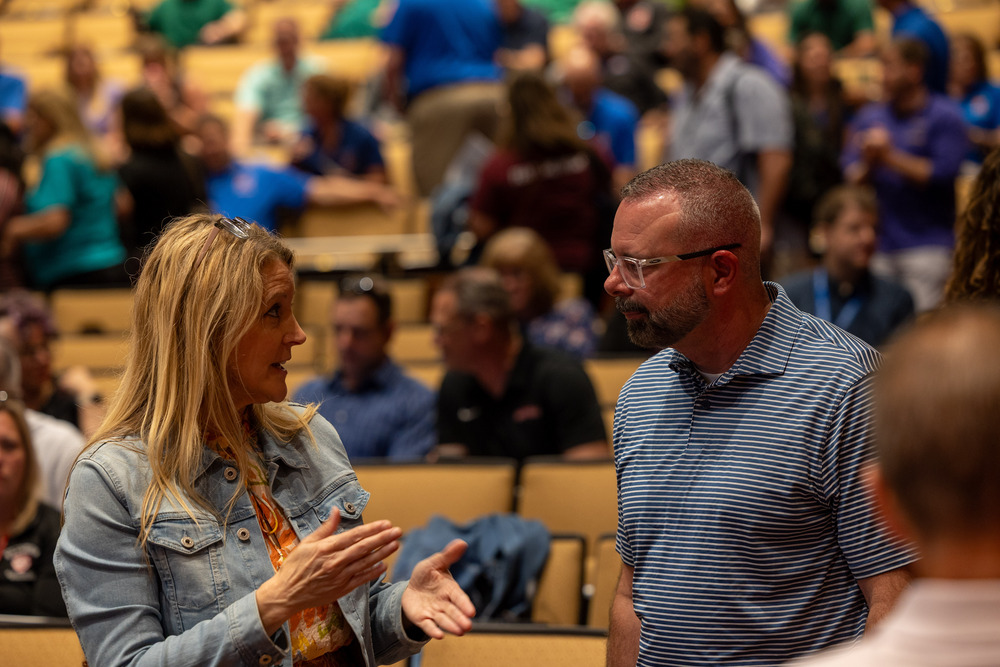
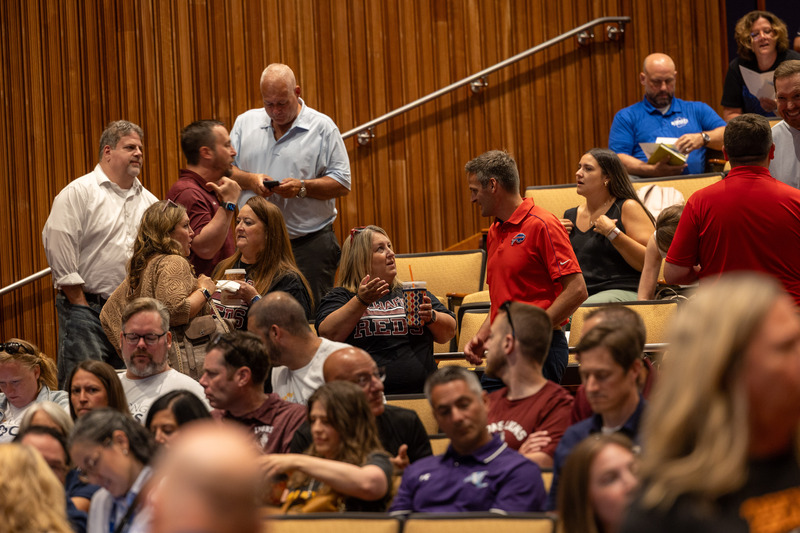
 The 2026 Leadership Academy took place at Finger Lakes Community College on July 8 and 9, bringing together more than 250+ leaders from across the 25 Component Schools in the Wayne-Finger Lakes Region for an annual retreat designed to inspire each participant and shed light on the opportunities for regional collaboration that lie ahead.
The conference kicked off with an engaging, compelling presentation from Dr. Julia Garcia, who brought her experience with psychology and cultural use of technology to the group. Her dynamic presentation created opportunities for crowd participation and powerful, open conversations about balance, stress and asking for help when you need it.
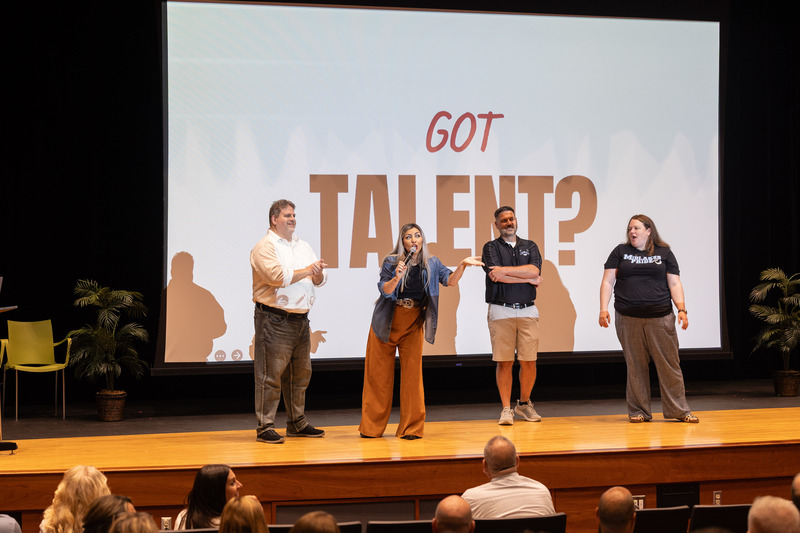 Breakout sessions later in the day created time and space for districts and leaders with similar roles and responsibilities to catch up, form new relationships and discuss shared challenges in their work.
Chris Brown, Superintendent at Marcus Whitman Central School District, led a dynamic session on crisis management. He offered advice to administrators on prioritizing clear communication, taking small steps and being careful not to overstep if someone else should be in charge of a situation.
“When you're in a really challenging situation, you have to slow down and focus on how you show your reasoning, and to do that, you have to take your ego and set it aside,” Dr. Brown said. “You have to be able to explain to a board, to a community, to your staff, to your students, why you are making the decision that you're making. An attorney will say, ‘We can argue the facts, we can argue the law, or we can just plain argue.’ And when we just plain argue, we're going nowhere. You have to bring a sense of ownership and clarity to the tough decisions.”
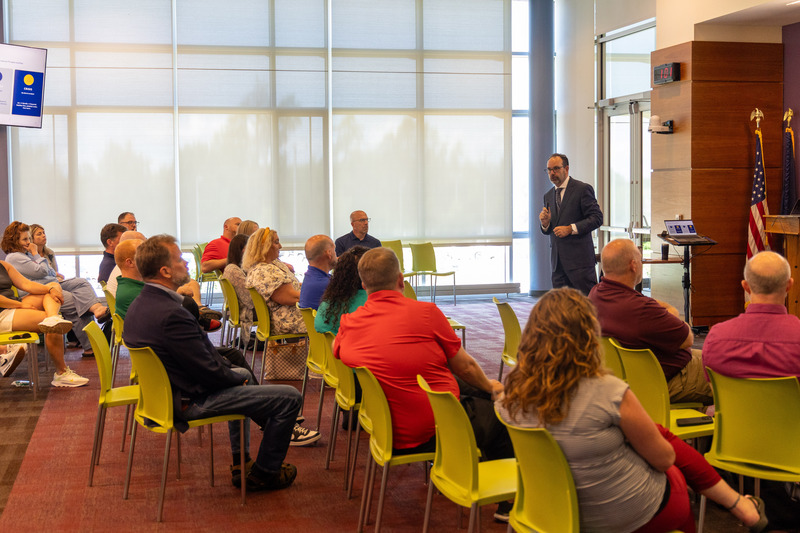 Another speaker, Blair Braverman, spoke about her experiences as a professional dogsledder and the leadership lessons she’s derived from working with her team of dogs over the years. She shared stories of 100-mile treks across the frozen Alaskan tundra, equipped with only the resources she could pack on her sled.
In discussing Blair’s presentation, Marion Central School District Superintendent Ellen Lloyd said there are strong parallels between the resilience and teamwork required out in the snow and out in our districts, schools and communities.
“We all know each other so well, and we have the chance to ask, ‘How are we going to work together and get through this? How are we going to figure out a way to come out on the other side?’” she said. “And to me, that's just the most beautiful experience you can ask for: To be out there, completely trusting your team and exploring the most spectacular frozen places on Earth, not knowing what you're going to encounter, but knowing that you're going to get through it together.”
Superintendents from several districts, including Palmyra-Macedon, Newark, Red Jacket and Wayne-Finger Lakes BOCES, began the second day of the conference with a clear call to action: Our region has the unique opportunity — and challenge — of forging a new path forward in a way that provides resources and options to all students, not just those within a certain zip code.
“We can intentionally build pathways with purpose, connection, and resiliency that lead to sustainability in our religion — and this is the importance of true, collective leadership,” said Susan Hasenhauer, Superintendent of Newark Central School District. “This is about our ability as a region to thrive. It's about deciding who we are and who do we want to become? We can build something that no district could build alone; Regional leadership is our opportunity.”
Dr. Bob Ike, Superintendent at Palmyra-Macedon Central School District, made the case for structuring regional resources in a way that benefits students and still preserves individual district identity, strengths and established programs.
“No student chooses where they were born. None of them chose which district line surrounds their home, and yet those invisible lines often determine what courses they can take, what pathways exist, what teachers they encounter and, ultimately, what doors will open for them,” Dr. Ike said. “Should opportunity depend on an address? Today’s learners need pathways, not borders.”